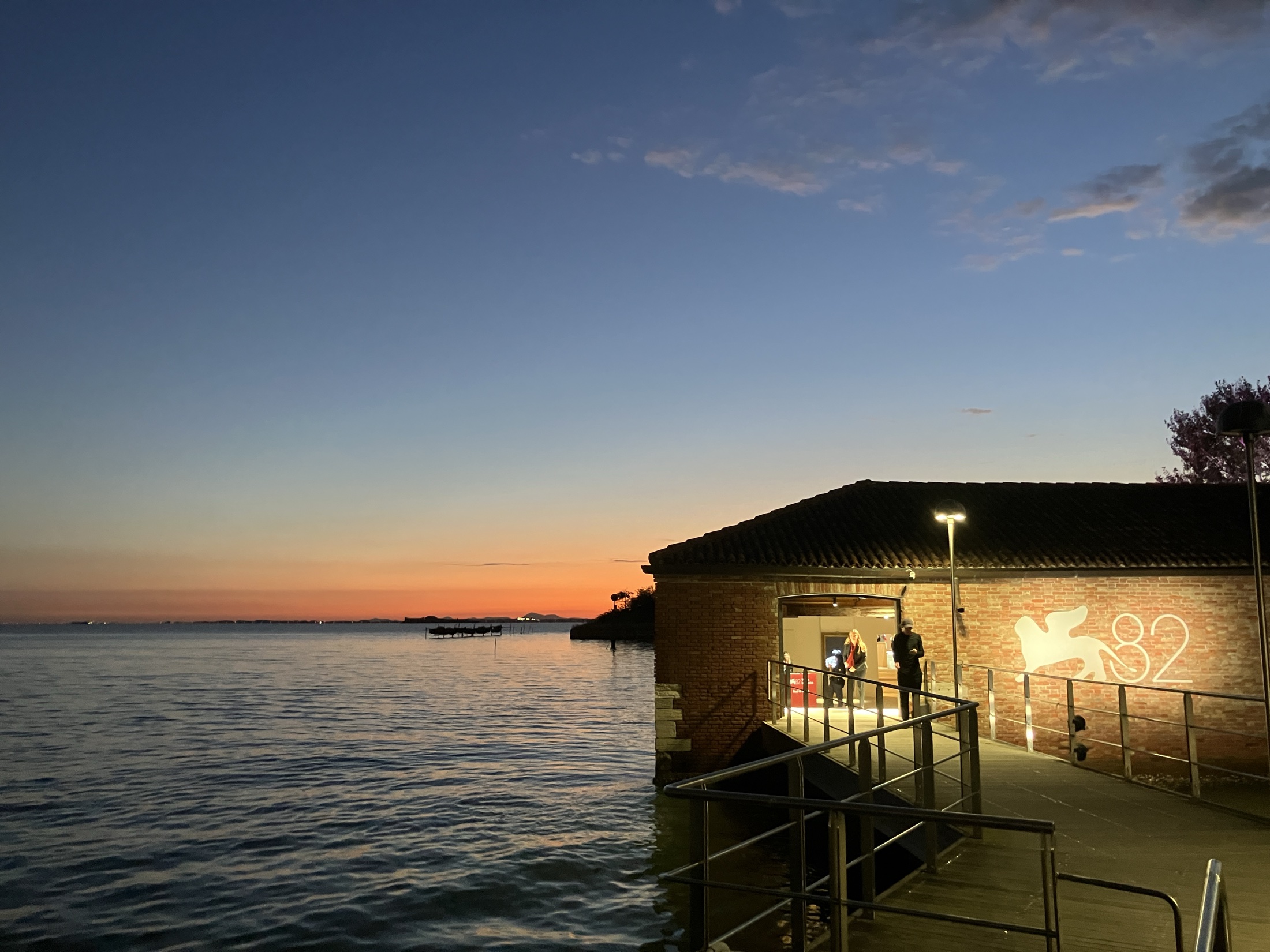

A very warm thank you to everyone in the XR community who contributed with their tips and insights to make this guide useful. See you in Venice!
USEFUL LINKS
Official selection Get your accreditationINTRODUCTION
Why Venice?
The Biennale Cinema is one of the best places to meet with the international immersive community. It also happens in, quite simply, the most beautiful city in the world.
The festival is one of the main gatherings for creative XR professionals. Most attendees are filmmakers, producers, curators, distributors, cultural institutions and other people actively working in the field. There is a strong European presence (because public funding has supported immersive production for years) alongside attendees from Asia, North America and elsewhere.
Venice is a film festival, not a trade show. You will not find rows of hardware-company booths. The focus is on selected works, creative practice, production, financing and distribution — and the event is small enough for connections to happen naturally, which is one of its biggest strengths.
Being in Venice changes someone’s mood. Exceptional architecture, water and late-summer light are present everywhere, and people are genuinely happy to be there. The result is a relaxed setting for conversations about projects and the future of our industry.
However, the event can be confusing on a first visit: the film festival is not on the main island of Venice but on the Lido, while the Immersive section is on a third island, and almost every journey involves a boat. This guide covers the geography, booking system, daily rhythm and practical details that are not obvious before you arrive.
GEOGRAPHY & TRANSPORT
Moving Around The Festival
There are three places any visitor needs to understand: Venice, the historic city where many attendees stay; the Lido, where the main Venice Film Festival takes place; and Lazzaretto Vecchio, the small island where Venice Immersive is held.
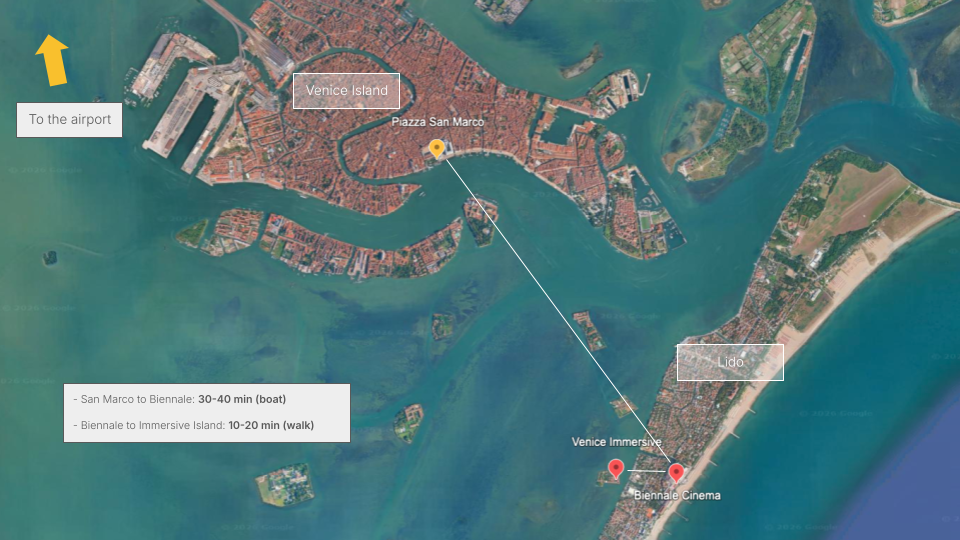
Boats are public transport in Venice. Keep in mind that every journey includes the walk to the dock, the wait and the crossing itself, so allow more time than the distance suggests.
From The Airport
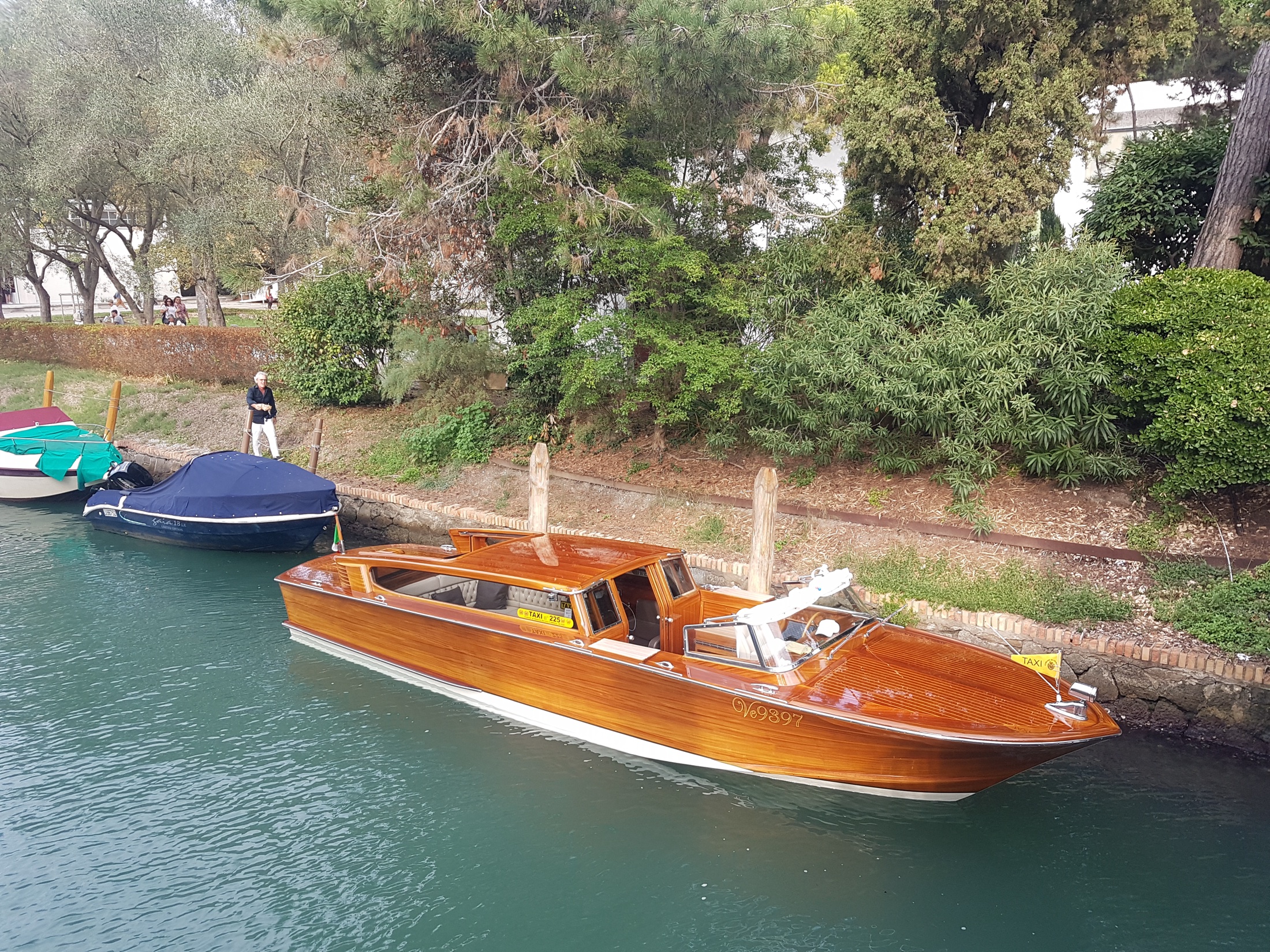
From Marco Polo Airport, you can take a public boat (vaporetto) or a private water taxi. The public boat is cheaper and usually takes around 90 minutes to reach Venice, depending on the stop and time of day. A private water taxi takes around 30 minutes but is more expensive.
Where To Stay
Many attendees stay in Venice because accommodation on the Lido fills early. If you stay in the city, try to remain close to San Marco or within 20 minutes of a vaporetto stop with a practical connection to the Lido.
Update: the festival organizers also recommend staying in Santa Elena, a quiet and non-touristy neighborhood only one stop away from the Lido.
The vaporetto from the San Marco area to the Lido takes roughly 30 to 40 minutes once you are on board. The complete journey can take 60 to 90 minutes during busy periods, particularly around midday, once walking and waiting are included.
It’s a cliché but it’s true that it is very easy to get lost in Venice, however Google Maps works well and mobile reception is reliable across the city and the Lido. Keep your phone charged and carry a battery bank; short routes often include more bridges and turns than expected.
Accreditation
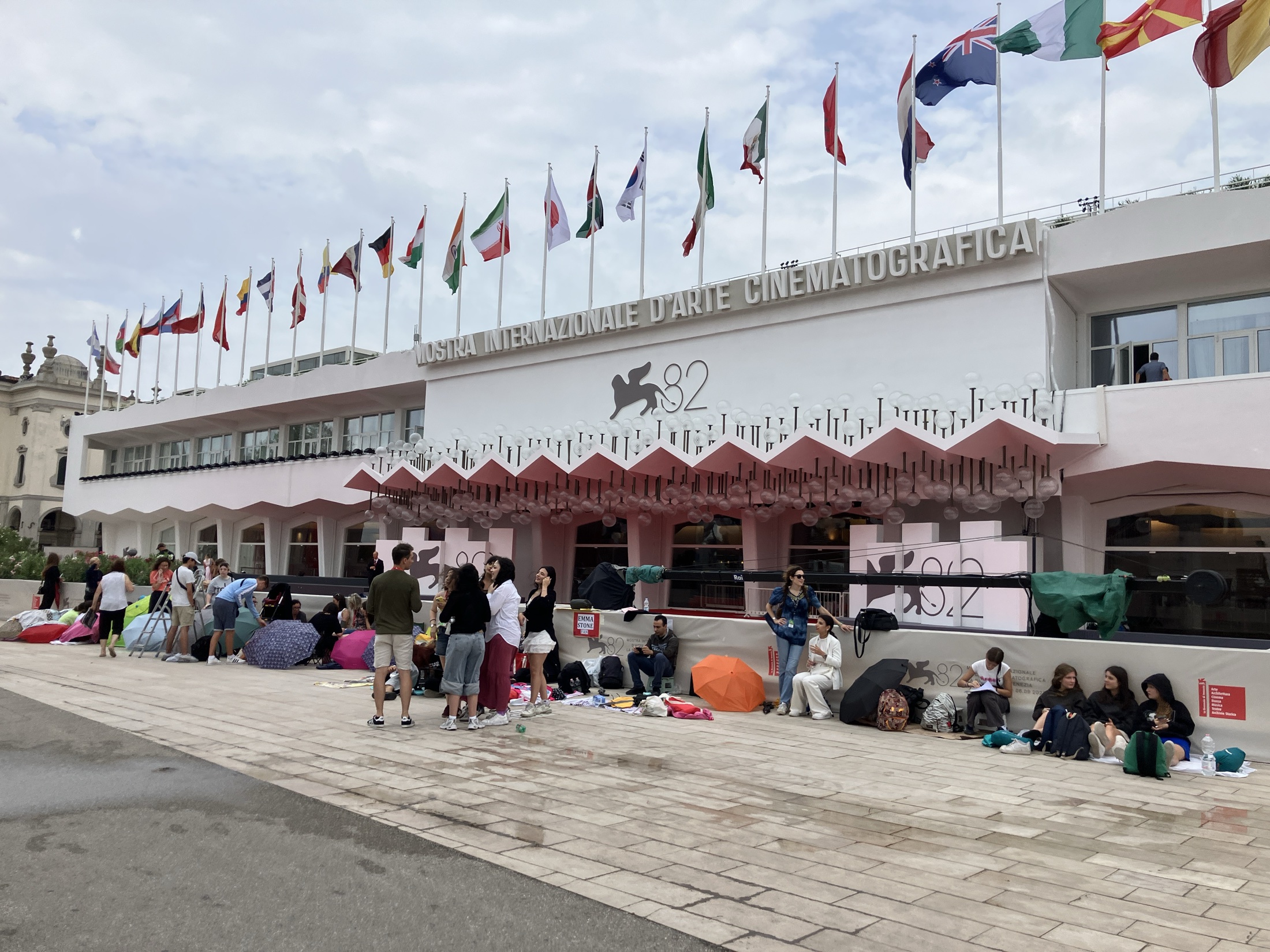
Professional accreditation is collected on the Lido, around the main festival campus at the Palazzo del Cinema and Palazzo del Casinò. This is the center of the wider festival, with the red carpet, press, security and large crowds.
Queues can be long, particularly at the beginning of the festival. Arrive early in the day and do not schedule an important meeting immediately afterward.
Getting To Venice Immersive
Venice Immersive is not on the Lido itself. From the main festival area, you walk to a dedicated dock and take a small shuttle boat to Lazzaretto Vecchio. The shuttle operates all day long and the crossing is short (less than 5 min), but you need to account for waiting times. Plan extra time if you have a meeting.
THE VENUE
The Immersive Island
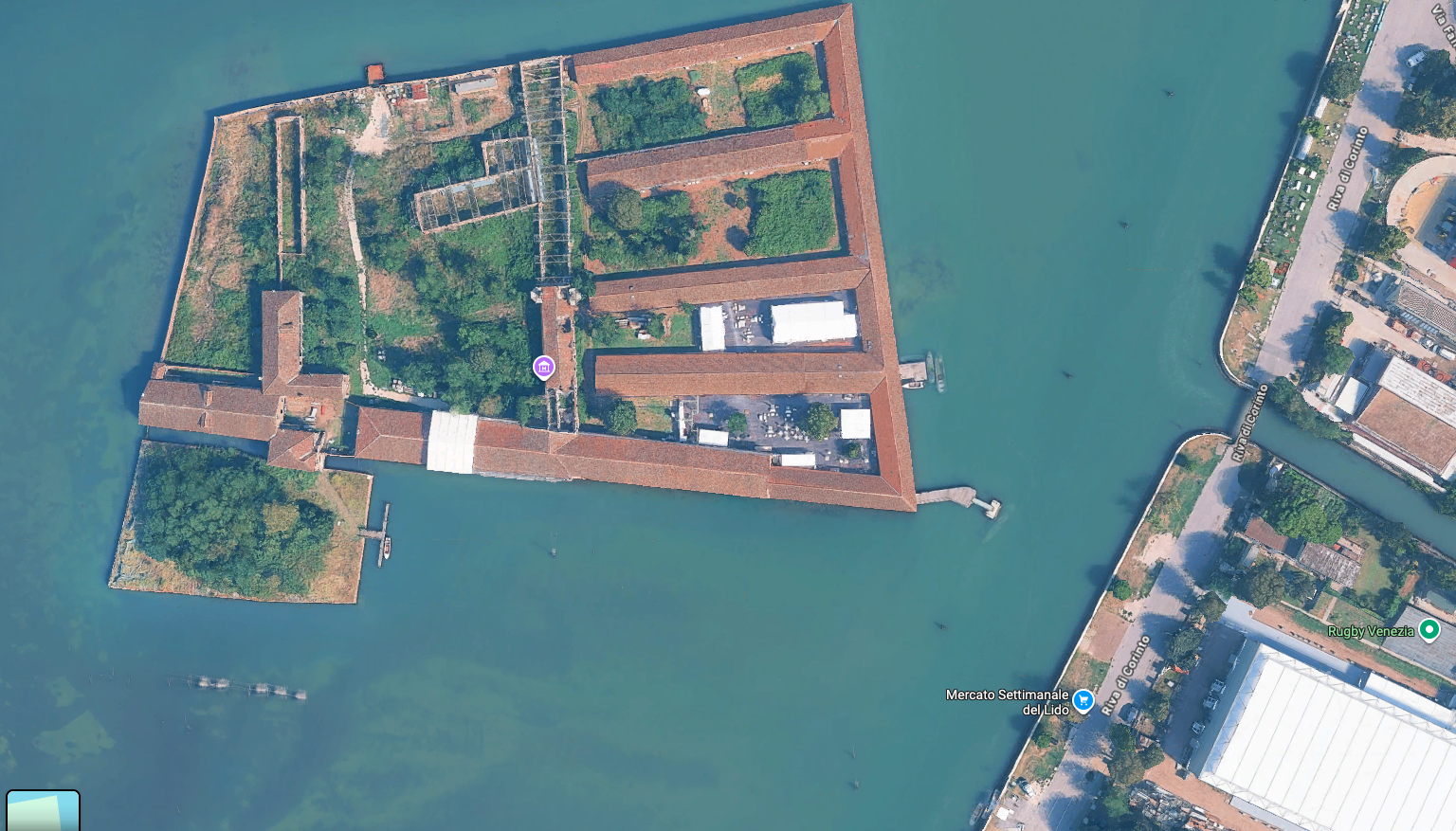
Lazzaretto Vecchio is a small historic quarantine island. The venue is one main brick building arranged around two courtyards. The exhibition space runs through the surrounding corridors, and each installation is managed by local docents (usually local students) who prepare the equipment, and help visitors with the headsets. Many docents return from year to year and do their job very well.
The Booking System
Professional attendees book experiences through the official festival system. Tickets are only released one day for the next, but the system fills very rapidly nonetheless. There is also an informal option with docents that keep handwritten waiting lists for no-shows. It is worth showing up for your waiting-list time if you really want to see a piece. Be on time as much as possible. Docents usually wait no more than five minutes before giving the place to someone on the waiting list.
The Medusas
Many individual works are shown inside circular fabric enclosures known as the “Medusas.” Each usually contains one chair, one headset and the equipment required for that work.
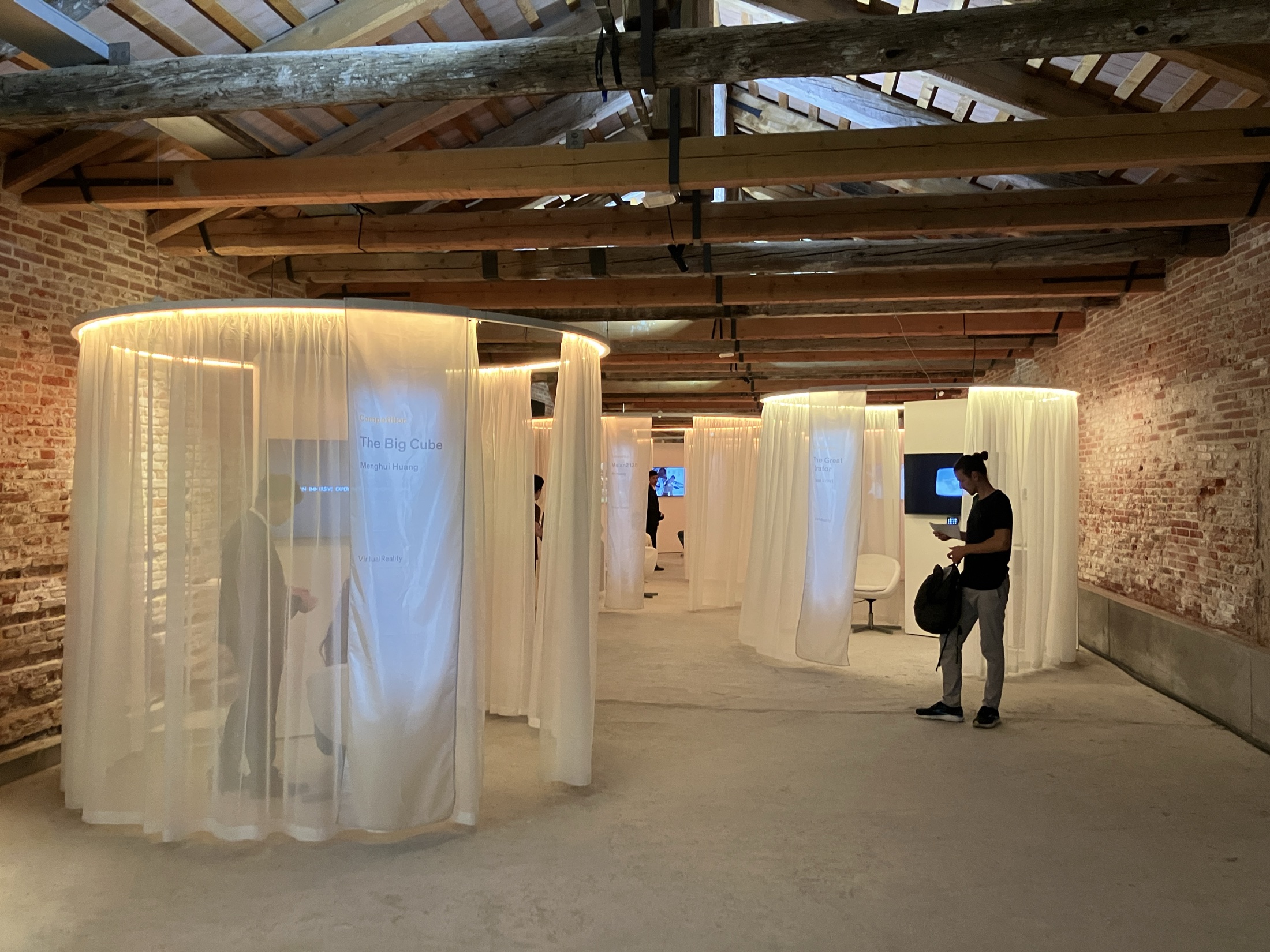
This explains why booking is difficult. A 30-minute experience using one headset can accommodate only a small number of people per day, unlike a cinema screening with hundreds of seats. Other works require cleaning, resets, calibration or physical guidance between participants.
Larger Installations
The program includes much more than seated VR. Some works are multiplayer, room-scale or physically installed, with projections, scenography, props or performers. There is a range of headsets being used, with Meta Quest being the most common, Apple Vision Pro becoming more visible, and some projects use custom sensors, glasses or other systems.
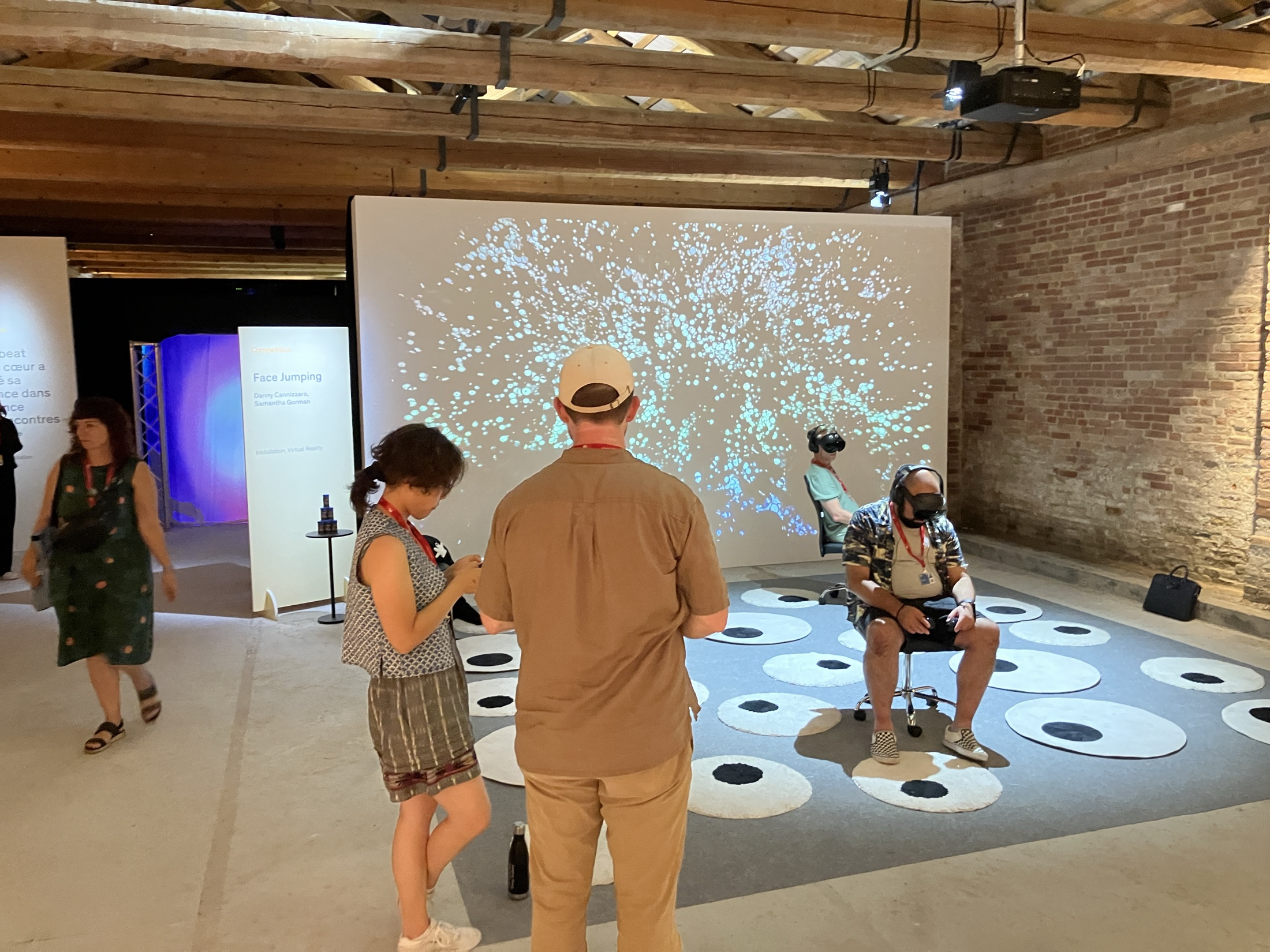
The works range from narrative and documentary pieces to conceptual and experimental projects. The curating team makes a very conscious effort to present a wide range of cultures and underrepresented communities.
Don’t try to overplan
Between the meetings and the emotional intensity of some pieces, don’t be surprised if you can’t watch more than a few pieces per day. It takes real planning and dedication to fill your time with showings, and it may be preferable to discuss your experience with other attendees anyway. The heat can also be an issue, although the building has a cooling system.
The island is quietest in the early morning, which is the easiest time to grab coffee and confirm a booking before the day fills in. From mid-morning on, experiences, meetings and unscheduled conversations overlap constantly — a conversation after a screening becomes a meeting, or someone makes an introduction while you are waiting for coffee.
Arrange a few meetings in advance, but treat them as anchors in your timetable rather than a conference-style schedule. Two or three planned meetings is usually enough, with room left for bookings and unexpected introductions.
Talks And Industry Programming
Venice Immersive includes talks, panels and presentations. Some happen in the courtyard; others use a larger stage. Topics include co-production, financing, distribution, creative retrospectives and the state of the market.
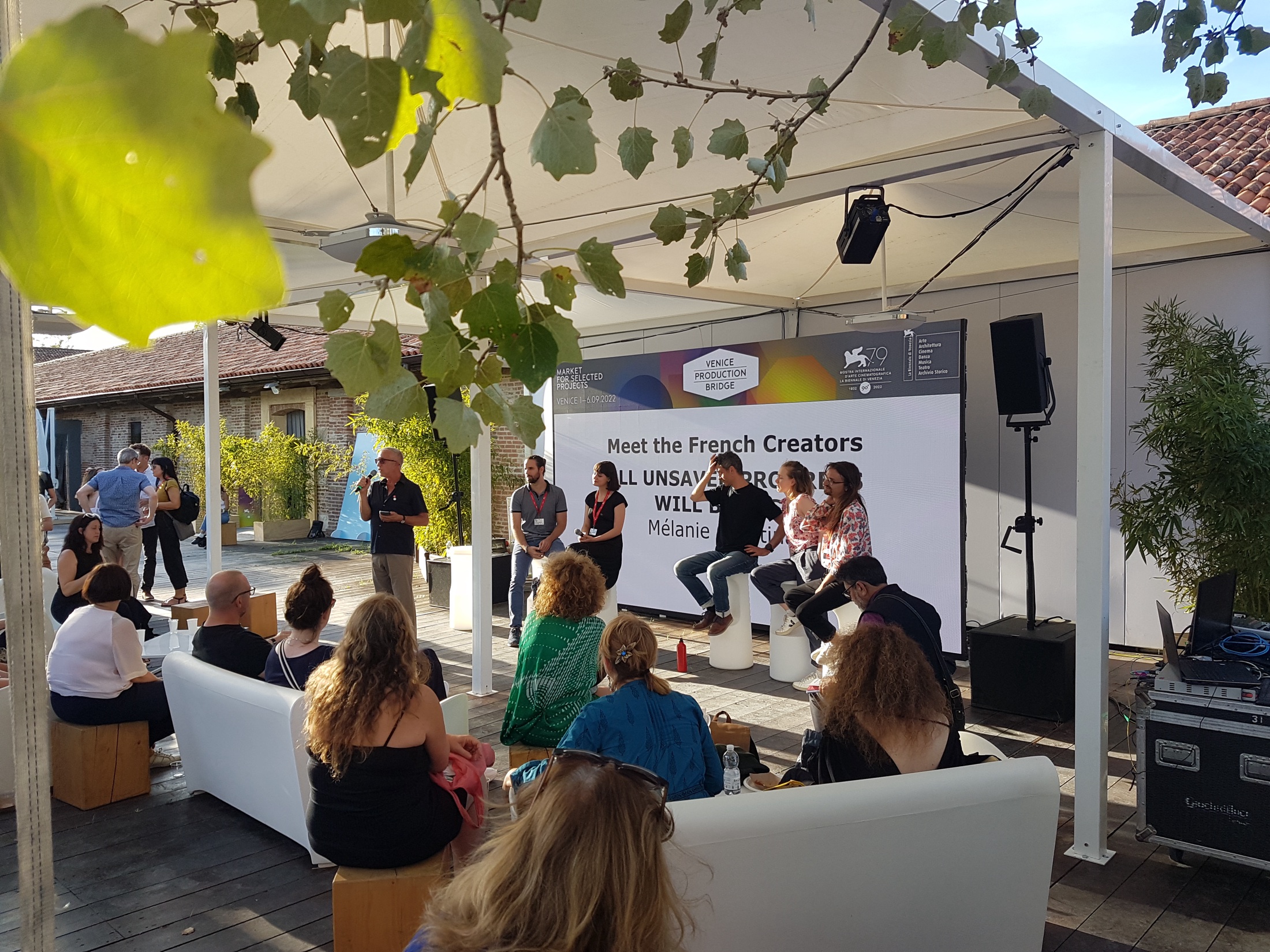
The festival also includes the Immersive Market as part of the Production Bridge, a formal program where selected projects in development meet potential partners, financiers and distributors.
The Café And Courtyards
The café is the center of daily life on the island. It serves coffee and pastries in the morning, sandwiches, salads and pasta at lunch, and spritzes and other drinks later in the day. An espresso is around 1€ and lunch is usually around 10€. You can also take the shuttle back to the Lido for more restaurant options, and on certain days there is a farmers’ market near the shuttle dock, which is wonderful.
Most meetings and informal conversations happen at the café tables or elsewhere in the two courtyards. This is also where people compare experiences, introduce contacts and decide what to see next.
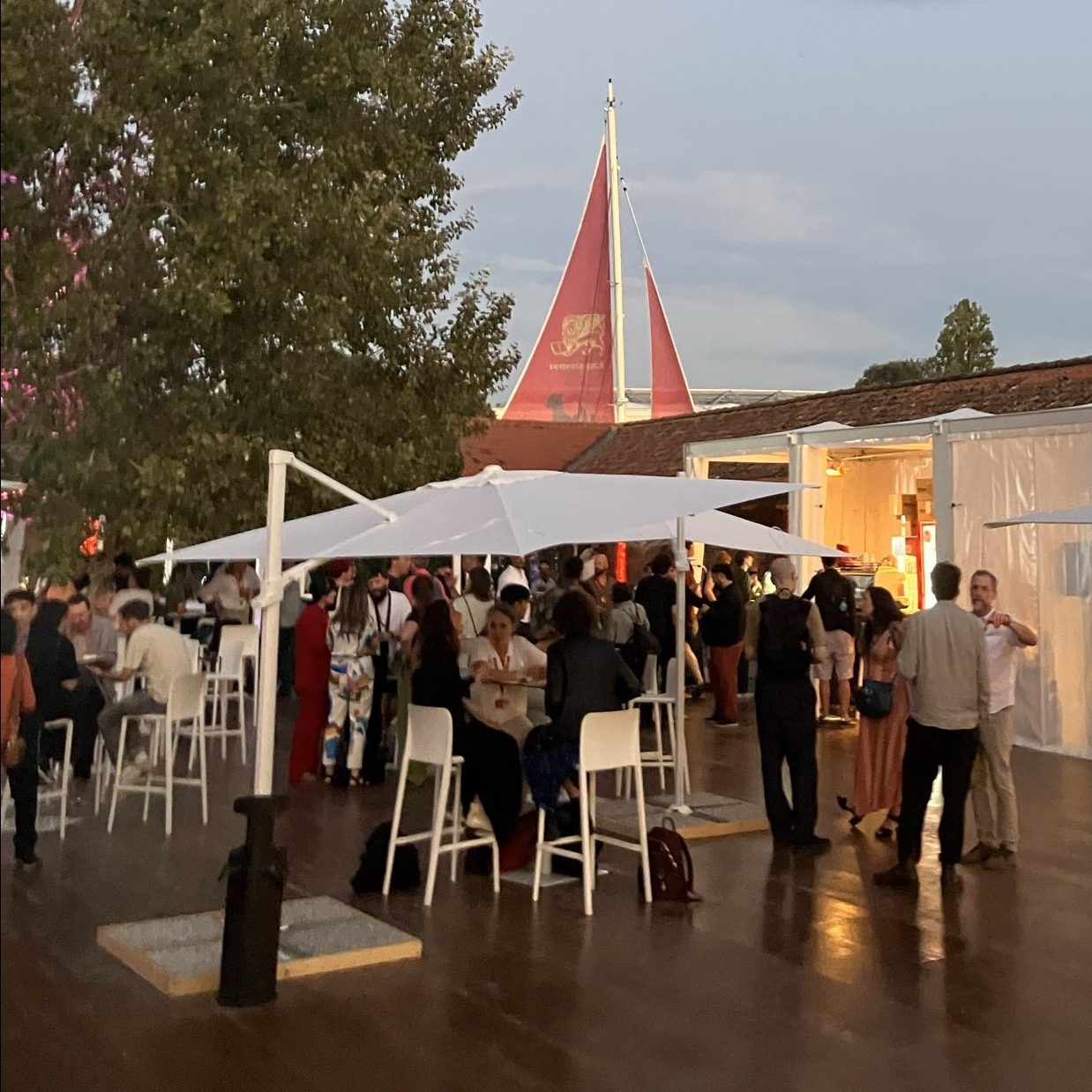
You can introduce yourself to people directly. A shared reaction to a work is usually enough to begin a conversation. The XR community is small, and many attendees are also meeting people for the first time.
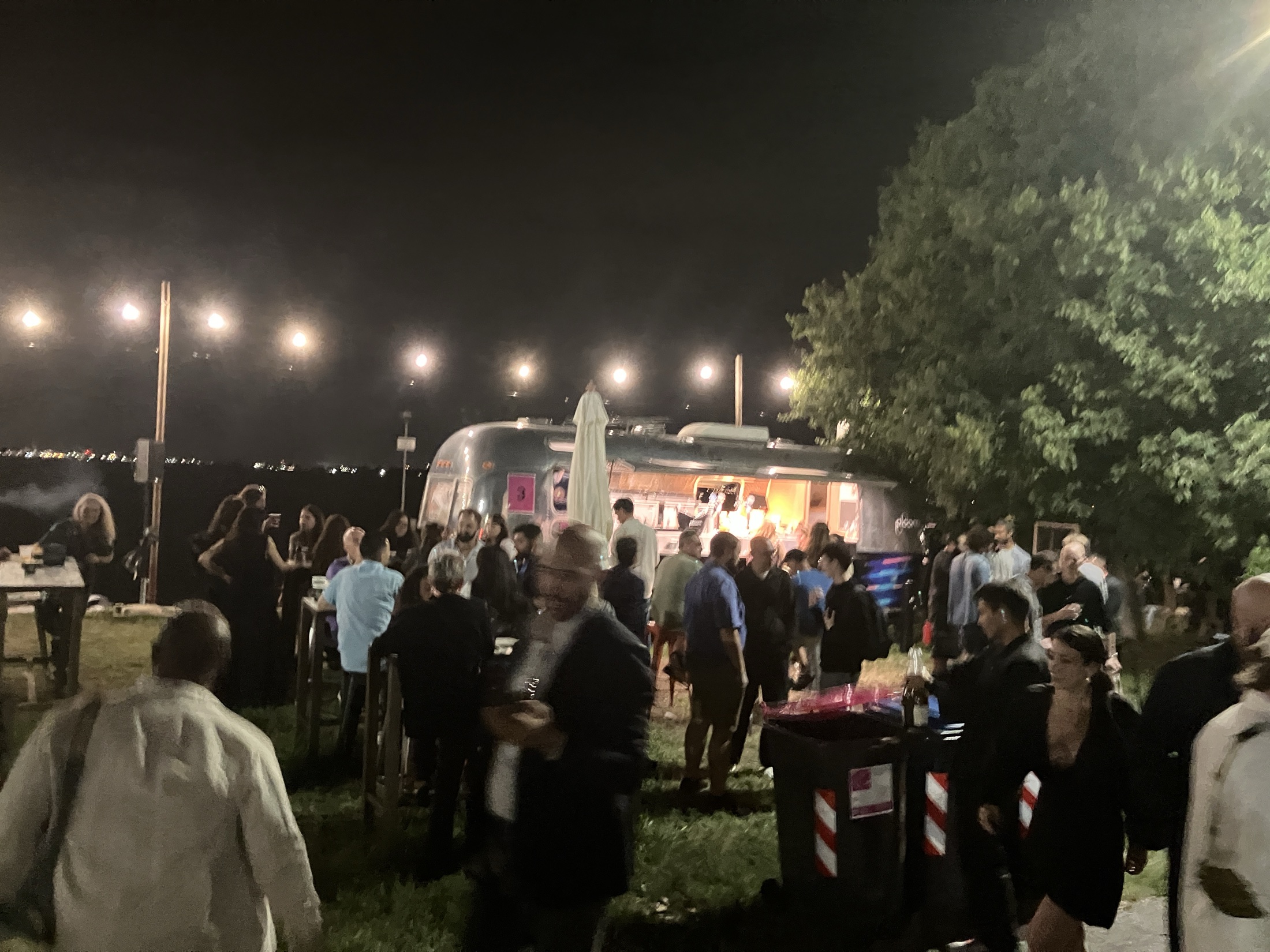
As the island empties out, some people stay for the evening, eating at popup bars and food stands a few minutes from the dock that stay open late. Others head back to the Lido or into Venice for dinner or plans made earlier in the day. It is not unusual to start dinner at 9:00 or 10:00 p.m. in Italy.
BEFORE YOU GO
Practical Advice
How Many Days?
Two full days can give you a great introduction, but you will need to decide whether to prioritize seeing works or talking to people. Most immersive professionals attend during the first week. Arriving the day before opening and staying for 3-4 days is usually enough for a substantial visit as a professional.
What To Bring
Comfortable shoes and a light outfit during the day; a battery bank and your other essentials; and glamorous outfits if you feel like it – there is no place better than Venice to dress up!
The weather is usually hot and humid in early September, with strong sun and a short period of rain most afternoons, typically around 4:00 or 5:00 p.m.
Updates from the XR community: Mosquito repellent can be useful, and bring snacks during the day!
What To Avoid
Scheduling an important meeting right after collecting accreditation, when queues are longest; building a conference-style, back-to-back agenda instead of leaving room for the unexpected; and cutting it close for the shuttle to Lazzaretto Vecchio, since missing one can cost you a booking.
MEET IN VENICE
Say hello at the festival.
Leave your email and we’ll reach out to find a time to connect.